Custom fibre-reinforced polymer components, moulds, and cladding systems — engineered lightweight, corrosion-resistant, and built to your exact form.
Material
GRP / FRP
Process
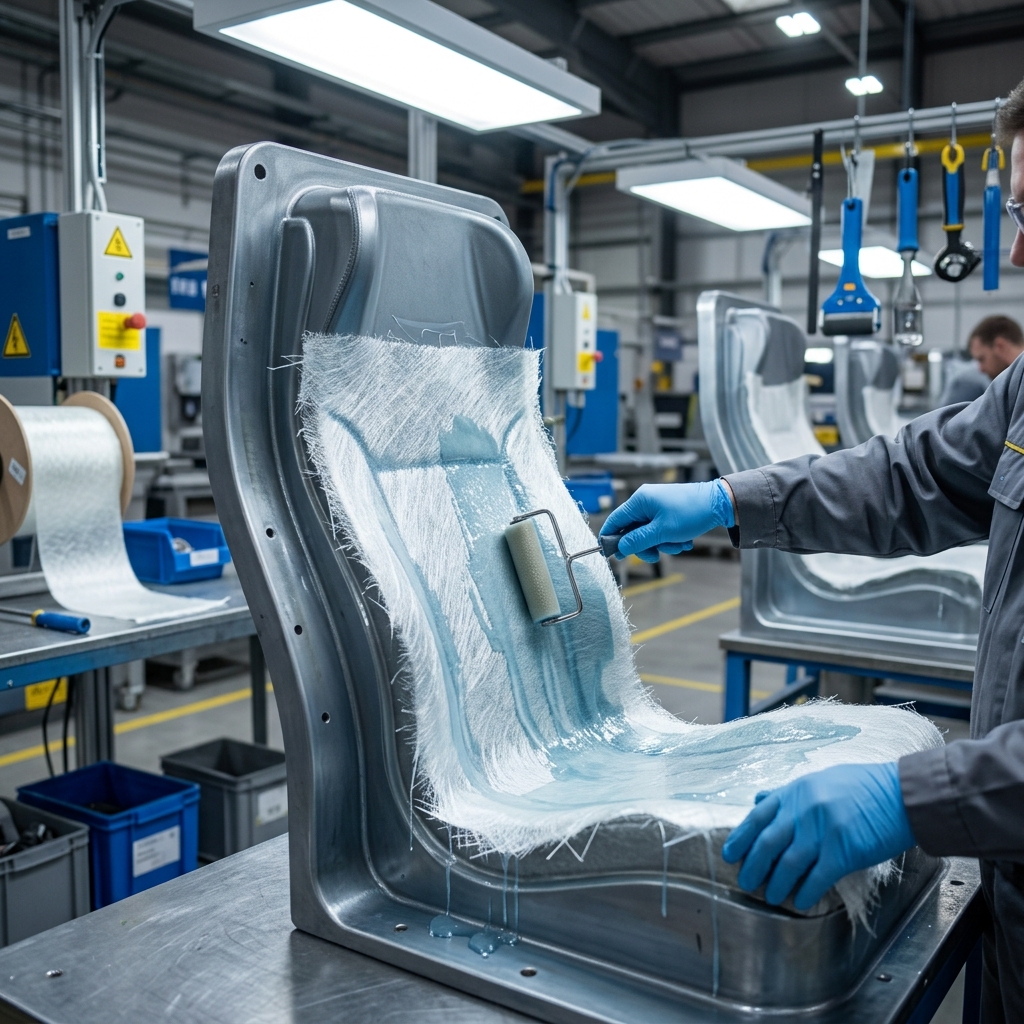
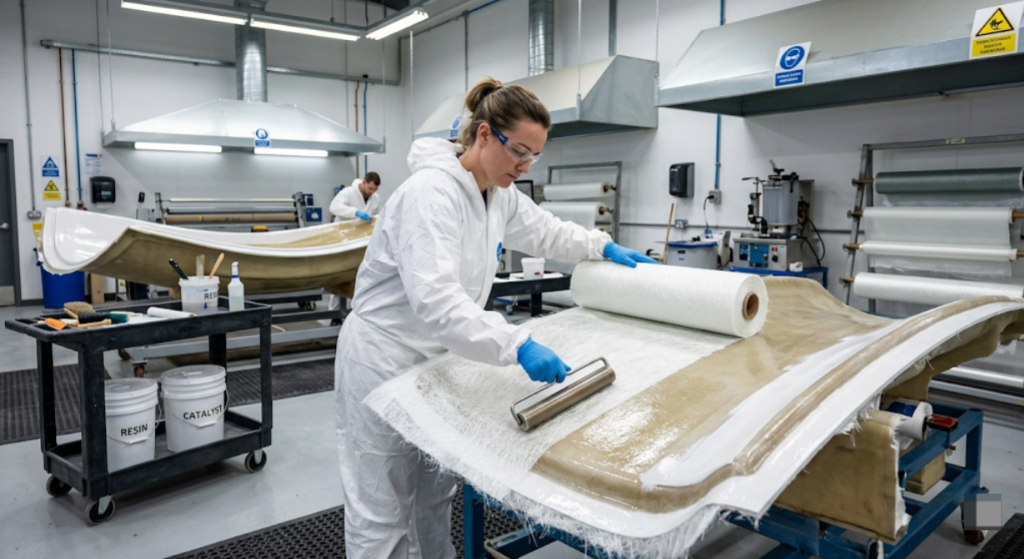
Hand Lay-Up
Location
Singapore
The Material
Fibre-Reinforced Polymer (FRP) — also known as GRP or fibreglass — is a composite material made by embedding glass fibres within a polymer resin matrix. The result is a material that combines high structural strength with low weight, and is naturally resistant to corrosion, moisture, and chemical exposure.
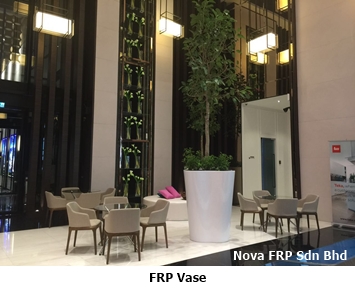
Unlike metal, FRP does not rust or oxidise. Unlike timber, it does not rot or warp. It can be moulded into virtually any shape, finished to a smooth gel coat surface, and produced in any colour — making it a versatile choice for both structural and aesthetic applications.
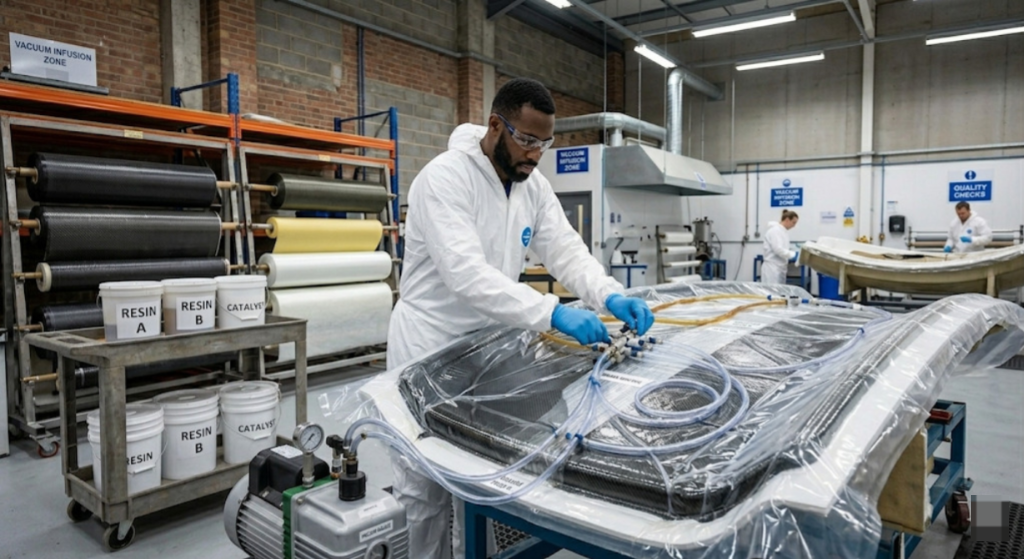
We fabricate GRP and FRP components in-house using hand lay-up and vacuum infusion methods, with full mould-making capability for repeat production.
Why Choose FRP
FRP is chosen not by default but by specification. Here is why engineers and designers specify it.
FRP achieves comparable strength to mild steel at roughly one quarter of the weight. This reduces structural load, lowers transport costs, and simplifies installation — particularly for elevated and cantilevered elements.
FRP does not oxidise, rust, or corrode — even in coastal, marine, chemical, or humid environments. No paint, no primer, no protective coating is required to maintain the surface over the product's lifetime.
Because FRP cures in a mould, it can be produced in complex curves, undercuts, and three-dimensional forms that are impossible or prohibitively expensive in metal. One mould enables unlimited identical copies.
Non-conductive by nature. Suitable for electrical enclosures, switchgear housing, and applications where metal would create earthing or heat transfer issues.
The gel coat surface does not require periodic repainting, rust treatment, or protective coatings. Cleaning is sufficient for most environments over the product's service life.
Gel coat is available in any RAL or custom colour, applied integral to the laminate. Smooth, textured, or patterned surfaces can be specified at the mould stage.
How We Build It
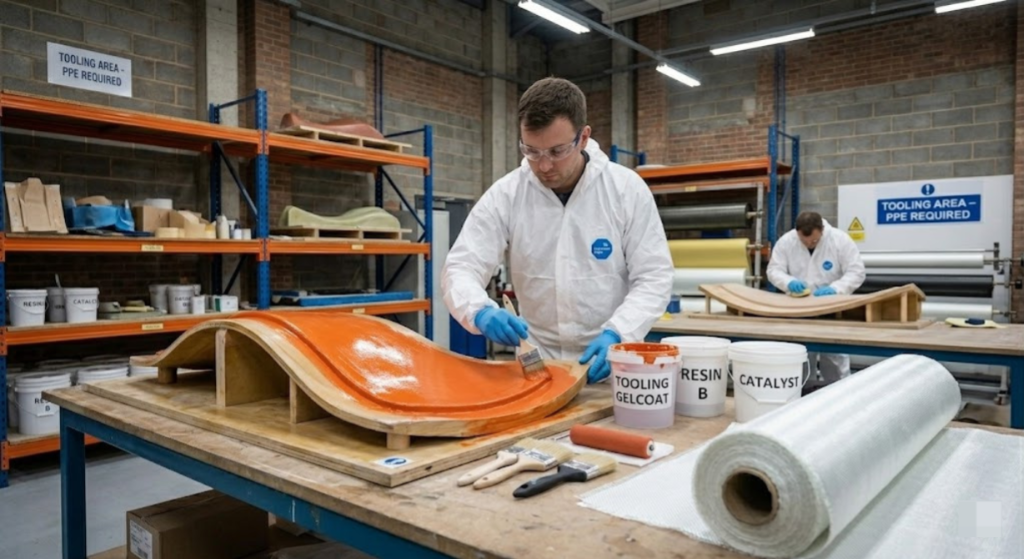
Glass fibres and resin are manually applied to open moulds. Ideal for large or complex parts needing low tooling costs.
Resin is drawn through dry fibre under vacuum pressure, producing a high-strength, low-void laminate.
Custom master moulds built from 3D models or plugs, enabling high-quality, repeatable production runs.
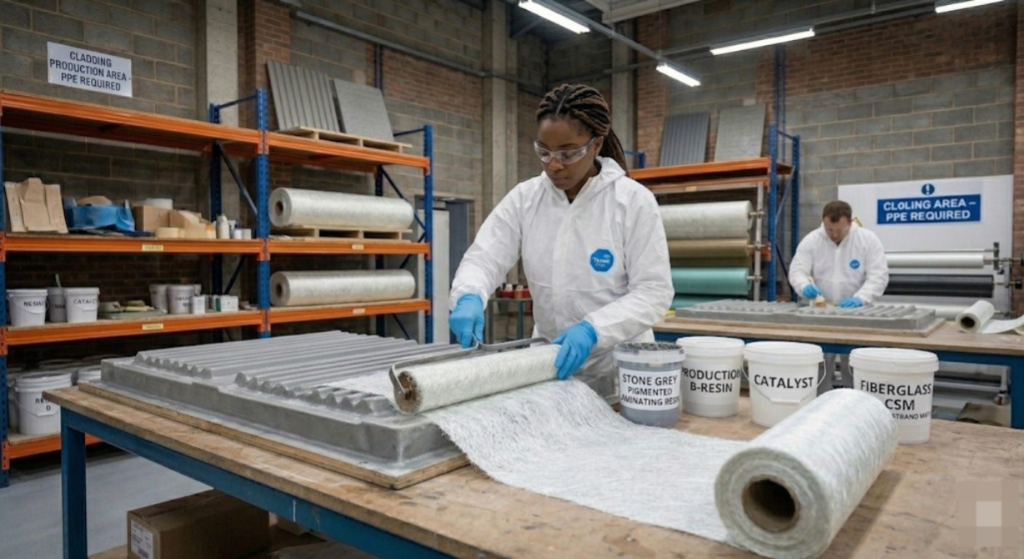
Lightweight, durable flat or custom-profiled fibreglass panels for facades and architectural enclosures.
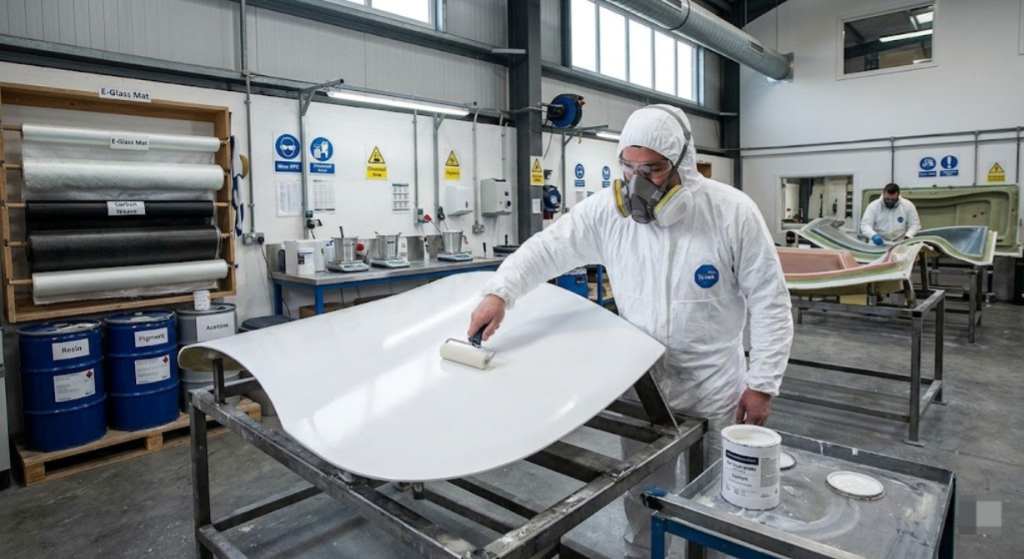
Pigmented, UV-resistant outermost layer applied in the mould for a smooth, paint-free finish.
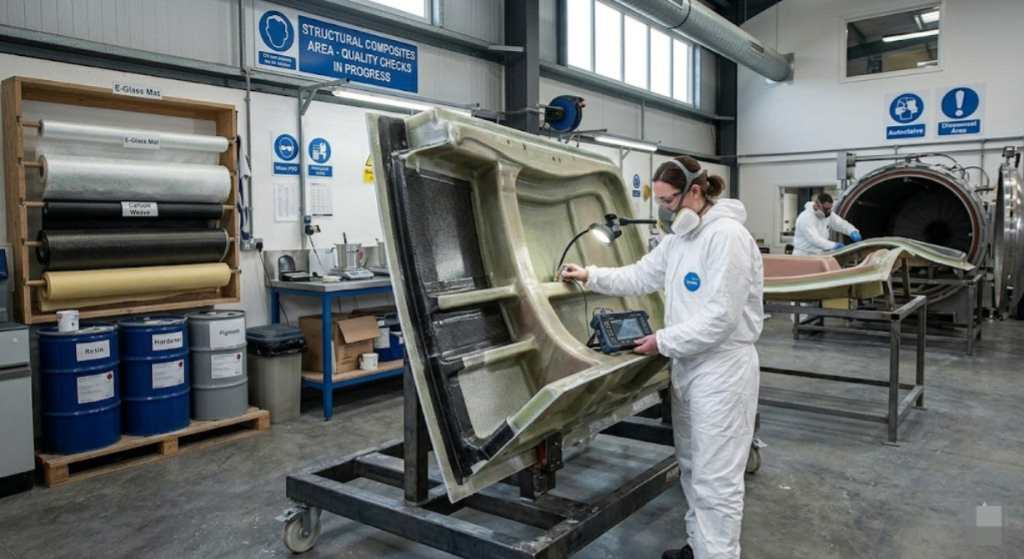
Heavy-duty engineered laminates built for load-bearing applications, including tanks, beams, and enclosures.
Our FRP Process
We review your drawings or 3D files and build a master plug in foam, MDF, or 3D-printed form.
A production mould is fabricated from the plug, polished, release-treated, and prepared.
Gel coat and laminate schedule are applied. Parts cure under controlled conditions.
Parts are trimmed, finished, and go through final QC checks before delivery.
Material Property
"Corrosion-free for
its entire service life."
Start an FRP Project
Share a sketch, a 3D file, or a reference image. We will advise on the best laminate and process for your application and return a detailed quote.
Quote within 1 business day
Share your files and we will specify the laminate schedule, process method, and cost — fast.
Mould-and-repeat production
One-off prototypes accepted. For repeat orders, we retain your mould for future production runs at reduced unit cost.
Design support available
Not sure which process suits your application? We advise on material choice, wall thickness, and fabrication method before committing to production.